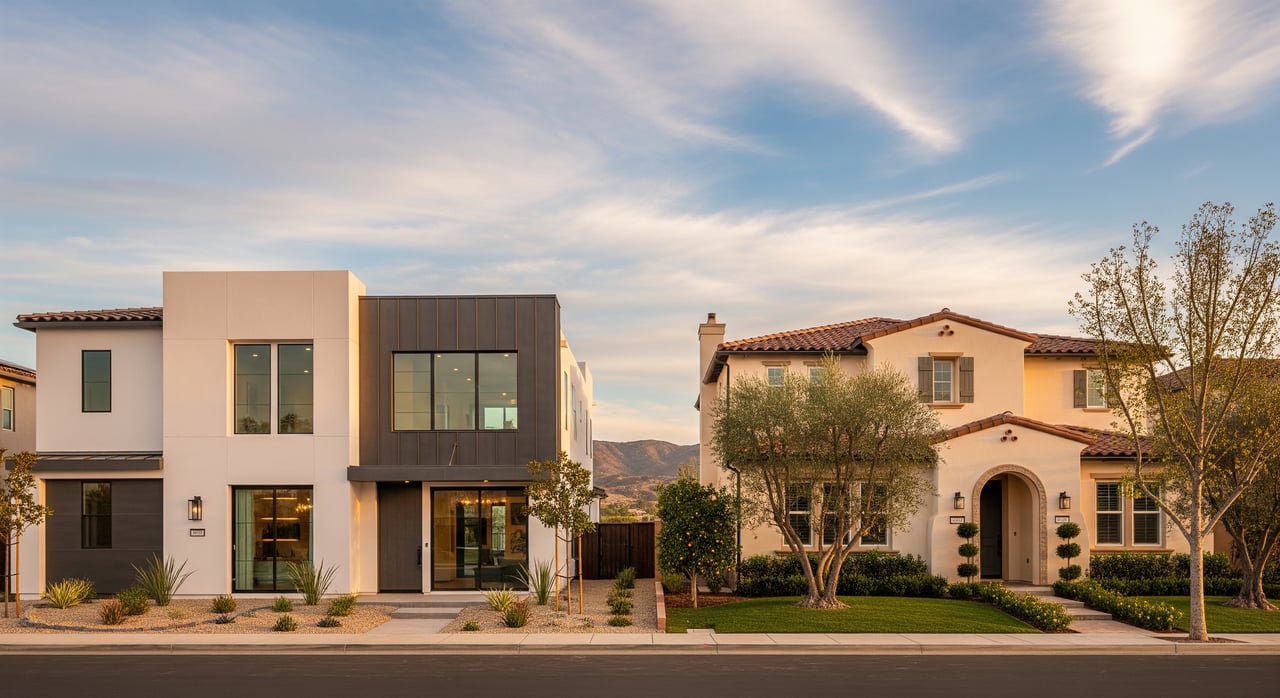
Trying to decide between a brand-new home or a resale in McSweeney Farms? You are not alone. You want the right mix of price, features, timeline, and long-term value without surprises. In this guide, you will learn the key differences, what to verify in this master-planned community, and how to choose the path that fits your goals. Let’s dive in.
McSweeney Farms snapshot
McSweeney Farms sits near Domenigoni and State Street on the outskirts of Hemet. It is a master-planned community that began around 2006 and includes about 1,600 homes. You will see different phases and floor plans across the neighborhood. That means lot size, location near amenities, and product types can vary by tract.
If you are comparing homes, look at tract and plat maps to understand lot lines, easements, and where larger or park-adjacent lots sit. Also note proximity to arterial roads, community amenities, and any nearby commercial areas or future projects. Small location details can influence pricing and daily living.
New build vs resale: what changes
Price and value
- New-construction homes often carry a price premium per square foot. That reflects newer systems, code-compliant features, and builder profit.
- Resales may offer more room to negotiate price or credits, especially if updates are needed or market activity is softer.
- In any market cycle, compare recent closed sales inside McSweeney Farms to understand true per-square-foot value for both paths.
- Builders sometimes offer incentives like closing cost help, interest rate buydowns, or upgrade packages. These can change your net cost compared with a resale.
Timeline and flexibility
- Resale homes commonly close in about 30 to 45 days once you are preapproved and inspections are complete.
- Builder inventory or spec homes may close in a similar 30 to 60 days.
- Build-to-order homes can take 4 to 12 months or longer. Weather, permits, labor, or materials can cause delays, so build in buffer time.
Features and efficiency
- New homes typically meet California Title 24 energy standards. Most new single-family homes built since 2020 include rooftop solar or equivalent performance measures. Ask whether a photovoltaic system is included or optional, and what is standard vs upgrade.
- Resale homes may need energy upgrades over time. Budget for windows, HVAC, insulation, and potential solar if those are not already present. Ask for the ages of major systems and any permits for recent work.
Warranties and risk profile
- Builders usually provide a written warranty. A common structure is a one-year workmanship policy and a limited structural warranty that can extend longer. Get the details and claims process in writing.
- Resales do not include builder warranties, so inspections are critical. Order a general home inspection, pest inspection, and specialist checks for roof, HVAC, and foundation if needed.
- Verify whether any past work had permits. Unpermitted additions can create title and insurance issues.
Lot location matters in McSweeney Farms
Phase and tract differences
Different phases can have distinct lot sizes, product lines, and distances to parks or community features. Review plat maps to confirm lot dimensions, side yards, and setbacks. If a cul-de-sac, corner, park-adjacent, or view lot is important to you, confirm availability by tract and phase rather than assuming all sections are alike.
Amenities, roads, and future plans
Consider how close the home is to amenities you plan to use. Also check the relationship to major roads like State Street and Domenigoni. Noise and traffic can vary by location in the neighborhood. Ask the City of Hemet about any planned development that could affect views, traffic, or nearby services.
Monthly costs, HOAs, and taxes
- Master-planned communities often have a homeowners association that manages amenities, common areas, and architectural guidelines.
- Some communities have sub-associations with different dues or rules. Confirm whether all phases are under the same HOA.
- Ask for the CC&Rs, bylaws, budget, reserve study, and meeting minutes. These documents can reveal planned projects or special assessments.
- Many newer Riverside County communities include special tax districts like Mello-Roos. Confirm whether the home is in a CFD and what the special tax rate is through county tax records.
Negotiation playbook
With builders
- Incentives can include interest rate buydowns, closing cost credits, or discounted upgrades. The type and size of incentives often change with inventory levels and timing.
- Builders may be less flexible on base price for popular plans but more open near quarter-end or when they have standing inventory.
- If the appraisal comes in low, some builders will adjust price or offer concessions. Ask upfront how they handle appraisal gaps.
With resale sellers
- Common levers include price reductions, seller credits for repairs, inclusion of appliances, or flexible closings.
- Inspection findings can support requests for repairs or credits. Prioritize safety and system items over cosmetic changes.
- If the appraisal is short, you can request a price adjustment, split the gap, or renegotiate terms.
Which path fits you?
Choose a new build if
- You want modern systems, energy features, and a builder warranty.
- You prefer structured design selections and possibly some customization.
- Your timeline is flexible, or you are open to a builder’s inventory home if one fits your needs.
- You value lower near-term maintenance costs and are comfortable paying a potential price premium.
Choose a resale if
- You want to move within 30 to 45 days and prefer known timelines.
- You want more price negotiation potential or plan to update at your own pace.
- You like established landscaping or lot placements that may be limited in current builder releases.
- You want clear comparable sales data from the neighborhood to support valuation.
What to verify in McSweeney Farms
- Recent closed sales and active listings in the community to compare price per square foot for both new and resale options.
- Whether there are special taxes like Mello-Roos and the exact rate for the specific parcel.
- The HOA structure, monthly dues, CC&Rs, rules, reserve study, and any planned projects or special assessments.
- Builder specification sheets, standard inclusions, upgrade pricing, and sample purchase contracts.
- For resales, the ages of major systems, recent permits, and any renovation documentation.
- Local school boundaries, commute times, and any planned nearby development with the City of Hemet.
- Title report, easements, and any encumbrances that affect use of the property.
- Utility providers and typical energy costs. Newer homes may be more efficient.
Step-by-step timeline overview
Resale path
- Get preapproved and review recent sales in McSweeney Farms.
- Tour target homes and compare lot locations by tract map.
- Write offer with inspection and appraisal contingencies.
- Complete inspections, negotiate any credits or repairs, and review HOA documents.
- Final loan approval, appraisal, and close in about 30 to 45 days.
New-build path
- Compare builder inventory versus build-to-order timelines and options.
- Review standard features, upgrade menu, and any solar or energy package details.
- Ask about incentives, preferred lender terms, and appraisal policies.
- For build-to-order, plan for 4 to 12 months or more, with scheduled walkthroughs and inspections.
- For inventory homes, expect a timeline closer to 30 to 60 days.
Documents to request
New build
- Builder spec sheet with standard features and pricing for upgrades.
- Purchase contract sample and warranty documents with claim process.
- Construction timeline, walkthrough schedule, and final inspection steps.
- Solar PV details and whether it is included or optional.
- Confirmation of any special taxes and HOA dues for the specific lot.
Resale
- Full home inspection, pest inspection, and any specialist reports needed.
- Seller disclosures and copies of permits for recent work.
- HOA resale disclosure packet, including CC&Rs, budget, reserve study, meeting minutes, and any pending litigation.
- Title report, plat map, and a list of easements and encumbrances.
Work with a local guide
Choosing between a new build and a resale in McSweeney Farms comes down to your timeline, cost comfort, and how much you value new systems and warranties. A local, data-driven approach helps you compare true net costs, evaluate lot locations by phase, and avoid surprises with HOAs and special taxes. If you want clear comps, smart negotiation, and steady communication from search to close, connect with the neighborhood team at Feigen Realty Group. Get pricing clarity, on-the-ground insights, and hands-on support for your next move.
FAQs
How do timelines differ for new builds versus resales in McSweeney Farms?
- Resales often close in 30 to 45 days, while build-to-order new homes commonly take 4 to 12 months or more. Builder inventory homes can close in about 30 to 60 days.
What should I check about HOAs in McSweeney Farms before buying?
- Ask for CC&Rs, bylaws, budget, reserve study, and meeting minutes, and confirm if there are sub-associations, planned projects, or special assessments.
Is there Mello-Roos in McSweeney Farms?
- Many newer Riverside County communities have special taxes, so confirm for each parcel through county tax records and factor the rate into your monthly budget.
What energy features do new homes typically include in California?
- New single-family homes built since 2020 generally meet Title 24 standards and include rooftop solar or an equivalent compliance path. Ask if PV is included or optional.
What inspections are most important for resale homes in Hemet?
- Order a general home inspection and a pest inspection, then add roof, HVAC, foundation, or sewer inspections as needed based on the property.
How can I compare true costs between a new build and a resale?
- Look at price per square foot, likely upgrades or renovations, HOA dues, any special taxes, utility costs, and builder incentives that reduce your net cash to close.
What negotiation levers can I use with builders and resale sellers?
- With builders, ask about closing cost help, rate buydowns, and upgrade credits. With resale sellers, negotiate price, credits for repairs, included items, and timing.