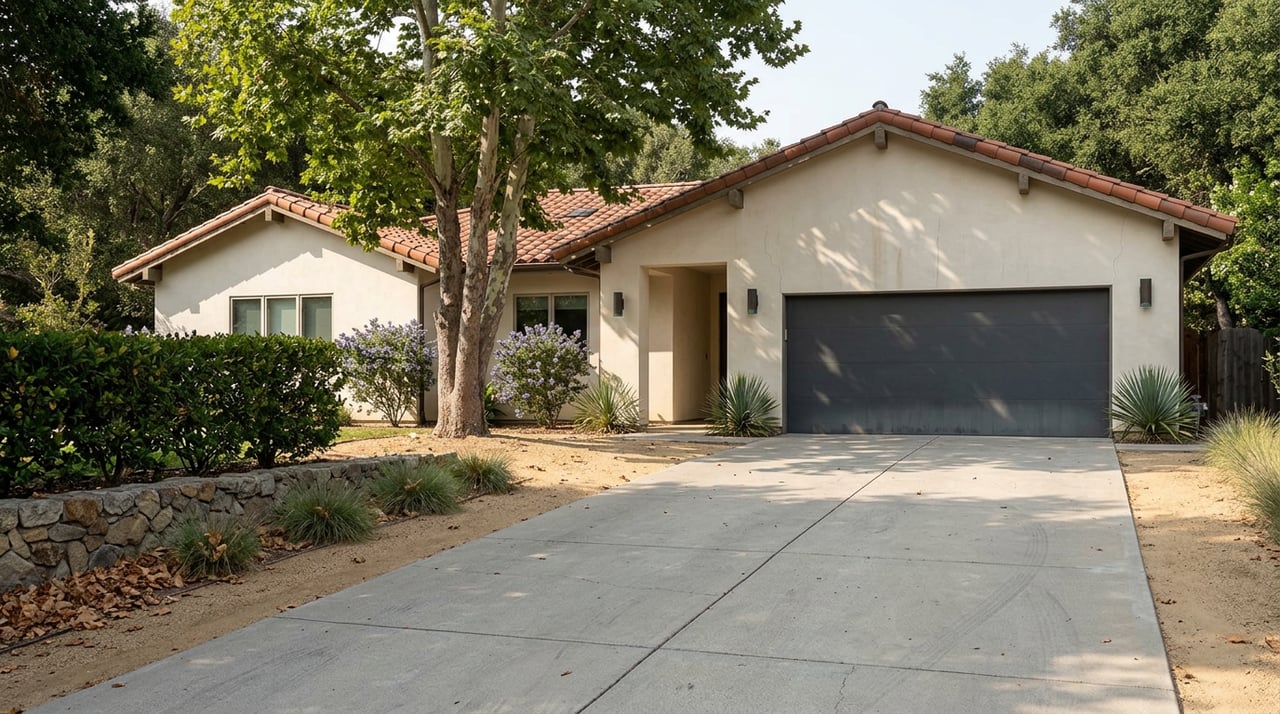
Two homes go on the market in Valle Vista this month, both priced in the mid-$400s, both roughly the same size. One sits close to the Florida Avenue corridor on city sewer and public water. The other sits farther out toward the foothills, on an acre with its own septic tank and a private well. On paper, in the comp sheet a buyer's agent pulls, these two houses look like the same transaction with a different floor plan.
They are not the same transaction. The septic and well home carries a different disclosure form, a different inspection contingency, a different closing timeline, and a different set of costs the buyer inherits the moment escrow closes. None of that shows up in the list price. It shows up three weeks into escrow, usually as a surprise.
Why the Median Price Hides the Real Story
Valle Vista's home prices sit within a few thousand dollars of Hemet's overall median, and on the surface that makes the two areas look interchangeable. But Valle Vista is not one market. Close to the Florida Avenue and Route 79 junction, older manufactured homes and small fixer-uppers dominate. Farther out toward the hills and the orchards, the lots get bigger, the homes get custom, and city infrastructure often stops. That's exactly the stretch where septic tanks and private wells are common rather than exceptional.
A local Valle Vista plumbing service that works this corridor puts it plainly on their own service page: the neighborhood mixes established homes with semi-rural properties where well systems, older pipe, and hard water all factor into the job. That's not a stray detail. It's the variable that determines whether your escrow closes in 30 days or 55.
What "Septic and Well" Actually Changes in Escrow
California does not have a single statewide law forcing a septic inspection before every sale. What it does require is that sellers disclose known material defects on the Transfer Disclosure Statement, and in practice, most Riverside County transactions layer on a Seller Property Questionnaire that asks pointed questions about the septic and well systems specifically: age, pump history, water quality, and any repairs.
The seller's duty stops at what they actually know. California law requires only that sellers disclose known defects, with no obligation to search them out or get expert eyes on the house. That's a lower bar than most sellers assume, and it's also why buyers in Valle Vista should never treat a clean disclosure form as proof the septic system is sound. It's proof the seller didn't know it wasn't.
The county backs this up with hard rules on where these systems can even sit. Riverside County's ordinance regulating well construction sets minimum separation distances between a well and any septic component:
A well must sit at least 100 feet from a septic tank, leach line, or leach field, and at least 150 feet from a cesspool or seepage pit, under Riverside County Ordinance No. 682, which governs well construction countywide.
That setback isn't trivia. On a Valle Vista lot where a buyer wants to add a garage, a pool, or an ADU, the drain field's location can quietly rule out half the yard.
What Inspections Actually Cost, and Why "Pumped Last Year" Isn't the Same as Certified
A pumping receipt is maintenance, not proof of function. A real estate transaction typically calls for a written inspection report, and the difference between a partial job and a full one is where most surprises hide.
| Inspection type | What it checks | Typical cost |
|---|---|---|
| Septic visual/operational inspection | Tank condition, baffles, water level | $300 to $600 |
| Septic pump-out plus inspection | Above, plus full tank pump | $450 to $900 |
| Full septic package (pump, camera, dye test) | Above, plus lateral line camera and drain field flow test | $700 to $1,400 |
| Well inspection with flow test | Pump condition, pressure tank, sustained yield in gallons per minute | $300 to $600 |
| Well water quality panel | Coliform, nitrates, arsenic, and other contaminants | $150 to $400 |
Riverside County's own environmental health department oversees the permitting side of this, and its septic systems program is where a seller or their agent pulls the permit history for a property before listing. That history matters because a system that was never permitted, or one modified without a permit, becomes a much harder sale.
For sellers who want the certification itself, the work has to come from a licensed C-42 contractor, not a general plumber and not a pumping-only service. Companies like Gardner Septic Service, which has worked Riverside County escrows since 2006, describe the same pattern local agents see constantly: a septic certification isn't a guarantee the system holds up forever, it's a snapshot of condition on the day of inspection, which is exactly why lenders want one dated close to closing rather than pulled from a folder of old paperwork.
The Flow-Rate Number That Quietly Shrinks the Buyer Pool
Here's the part that catches sellers off guard more than the inspection cost ever does. FHA and VA loans, which cover a real share of buyers in the $300K to $500K range Valle Vista sits in, require the well to sustain a minimum flow rate, generally 3 to 5 gallons per minute. A well that tests below that threshold doesn't just need a repair. It disqualifies the property from government-backed financing until the issue is fixed, which narrows the buyer pool to cash offers and conventional loans only.
That's the real cost of a septic-and-well property that a median price comparison can never show. It's not a line-item repair. It's a financing filter that determines who can even make an offer.
Who Pays, and How Long the Clock Runs
In most Riverside County transactions, the buyer orders and pays for the septic and well inspections as part of their own due diligence period, the same way they'd order a general home inspection. If the findings turn up real problems, who pays for repairs becomes a negotiation, not a fixed rule. Sellers sometimes fix the issue, sometimes credit the buyer at closing, sometimes split the difference.
Timing matters more than most sellers expect. Lenders and buyers generally want a septic or well inspection dated from inside the current escrow window, not one sitting in a drawer from a year ago. A pumping visit from last spring won't satisfy that requirement no matter how clean the system was at the time.
A Pre-Listing Checklist for Septic and Well Homes
Sellers who get ahead of this before listing tend to close faster and field fewer renegotiations mid-escrow. A reasonable sequence looks like this:
- Order a full septic inspection, pump plus camera plus dye test, two to four weeks before listing rather than waiting for a buyer's inspector to find problems first.
- Confirm the work is done by a licensed C-42 contractor so the report holds up with lenders.
- Locate the drain field on the parcel and make sure tank lids are accessible. Buried lids that require digging add cost and delay to any future inspection.
- Pull permit history from Riverside County Environmental Health to confirm the system was installed to code.
- Get a current well flow test and a full water quality panel, both dated close to your listing date rather than pulled from old records.
- Gather every pumping receipt, repair record, and the original well completion report. A documented history reassures both the buyer and the lender.
What This Means If You're Buying or Selling Here
The comp sheet will always show you a price. It won't show you which side of the sewer line a house sits on, or whether the well behind it can support the loan a buyer is trying to use. In Valle Vista, that distinction matters more than the few thousand dollars separating one listing from another, because it decides who can buy the house at all and how long escrow takes to close.
Sellers who treat septic and well readiness as part of their pricing strategy, not an afterthought discovered during inspection, tend to keep their timeline intact. Buyers who build a real contingency around flow rate and system condition, rather than assuming a clean disclosure form means a clean system, protect themselves from the surprise that shows up three weeks in.
A Few Questions Worth Asking Before You Write an Offer
Does California require a septic inspection before every home sale? No. There's no statewide mandate, but Riverside County's permitting and disclosure practices function like one in most transactions, especially when a lender is involved.
Who typically pays for the septic and well inspections? In most Riverside County deals, the buyer orders and pays for both as part of their due diligence period, though sellers sometimes commission a pre-listing inspection to speed up the sale.
How old can a septic or well inspection report be and still count? Lenders and buyers generally want one from inside the current escrow period. A report from months or years earlier usually needs to be redone.
If you're weighing a Valle Vista listing that runs on septic and well, or you're pricing your own property in that corridor, the details above are exactly the kind of thing worth walking through before you sign anything. Feigen Realty Group knows this stretch of the San Jacinto Valley property by property, not just by median price. Get Your Free Home Valuation and let's talk about what your specific address actually needs before it hits the market.